


The Virginia Department of Environmental Quality (DEQ) is considering a new wetlands permit for the Powerhouse 95 Phase II project in Spotsylvania County.
The proposed project would construct a seven-building data center campus, equipment yards, substations, and associated infrastructure on approximately 289 acres at 4110 Overview Drive, Fredericksburg, Virginia.
The proposed activity would affect:
- 3.18 acres of wetlands
- 1.62 acres of open water
- 693 linear feet of stream channel
- Unnamed tributaries in the Massaponax Creek watershed
Why Massaponax Creek Matters
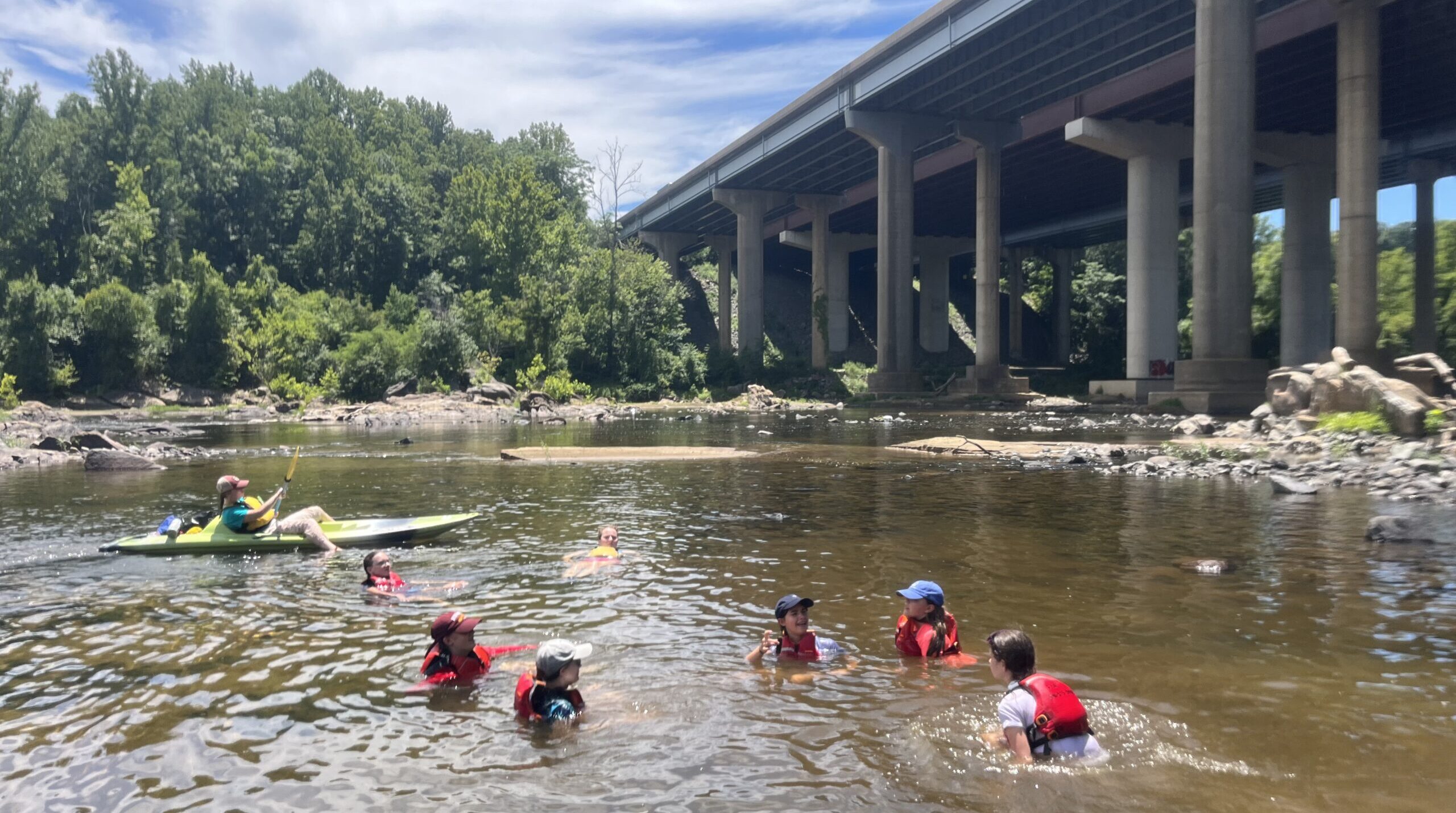
Massaponax Creek is a significant tributary to the Rappahannock River, and a large portion of Spotsylvania County drains to its watershed. As Spotsylvania County has grown, the Massaponax Creek watershed has experienced an explosion of urban and suburban development. More impervious surfaces degrade water quality by increasing stormwater runoff, which carries pollutants such as nutrients, sediment, and bacteria. DEQ officially classifies Massaponax Creek as impaired. The primary issue affecting the creek is bacterial contamination, specifically elevated E. coli levels. The creek frequently exceeds state safe water quality criteria for recreation. Wetlands and forests also serve as natural sponges and filters. They slow precipitation and allow water to enter waterways gradually. When wetlands are removed, a watershed loses its ability to filter pollutants before they reach the waterbody. This is exactly what is occurring in the Massaponax Creek watershed.
A Growing Problem
Development pressure, including residential, commercial, data center, and road infrastructure projects, has destroyed many acres of wetlands throughout the watershed. Virginia’s wetland mitigation program allows developers to apply for permits to destroy wetlands on-site if they purchase wetland credits from mitigation banks. While this theoretically results in “no net loss” of wetlands, it has created watersheds that are effectively wetland sacrifice zones. At least ten data center projects are approved or proposed in the Massaponax Creek watershed, many of which have had or will have impacts to wetlands and stream channels.
At the same time, the Chesapeake Bay Program committed in 2025 to restoring or creating 3,000 acres of nontidal wetlands and enhancing 15,000 acres of nontidal wetlands by 2040. The Virginia Wetlands Policy Task Force is also developing strategies for protect, restore, and manage tidal and nontidal wetlands across the Commonwealth. Permit approvals for wetland destruction in the Massaponax Creek watershed should stop until the state’s wetland mitigation program can be fixed.
Until broader fixes can be made, we must seek to stop the loss on a permit-by-permit basis.
Request a Public Hearing
Please ask DEQ to hold a public hearing to hear concerns about VWP Permit No. 25-2090 and its potential impacts on Massaponax Creek.
Send comments to:
meggan.sellers@deq.virginia.gov
Deadline: September 28, 2026
When requesting a public hearing, include:
- The reason why a public hearing is requested.
- A brief, informal statement describing the nature and extent of your interest in the permit, including how and to what extent your interest would be directly and adversely affected.
- Specific references, where possible, to terms and conditions of the permit, along with suggested revisions.
Be sure to include your name and mailing or email address, as well as the names and mailing or email addresses of all persons you represent, if applicable.
Suggested Talking Points
You can use the following language in your comments:
- The Virginia Department of Environmental Quality (DEQ) has officially classified Massaponax Creek as an impaired waterway.
- When wetlands are removed, a watershed loses its ability to filter pollutants before the water reaches the waterbody. This is exactly what is occurring in the Massaponax Creek watershed.
- The Virginia Department of Environmental Quality maintains a wetland mitigation program that allows developers to apply for permits that allow for the destruction of wetlands on-site if they buy wetland credits. While this theoretically results in “no net loss” of wetlands, it has created watersheds that are de facto wetland sacrifice zones. Local water quality, including Massaponax Creek, will become further degraded.
- Permit approvals for wetland destruction in the Massaponax Creek watershed should stop until the state’s wetland mitigation program can be fixed.