
Have you ever wondered how one person can make a difference for the environment? Sometimes, the answer starts right in your own neighborhood.
At Lake Arrowhead Community Park in Stafford County, Virginia, a community is working together to improve the environment while creating a more beautiful place for everyone to enjoy.
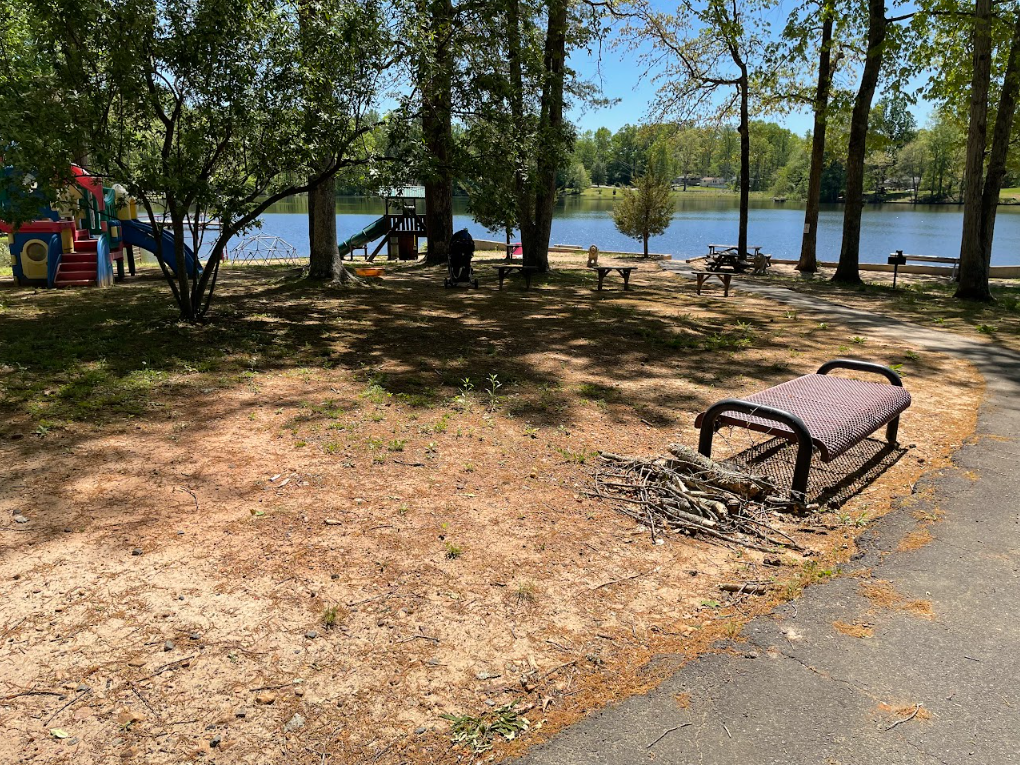
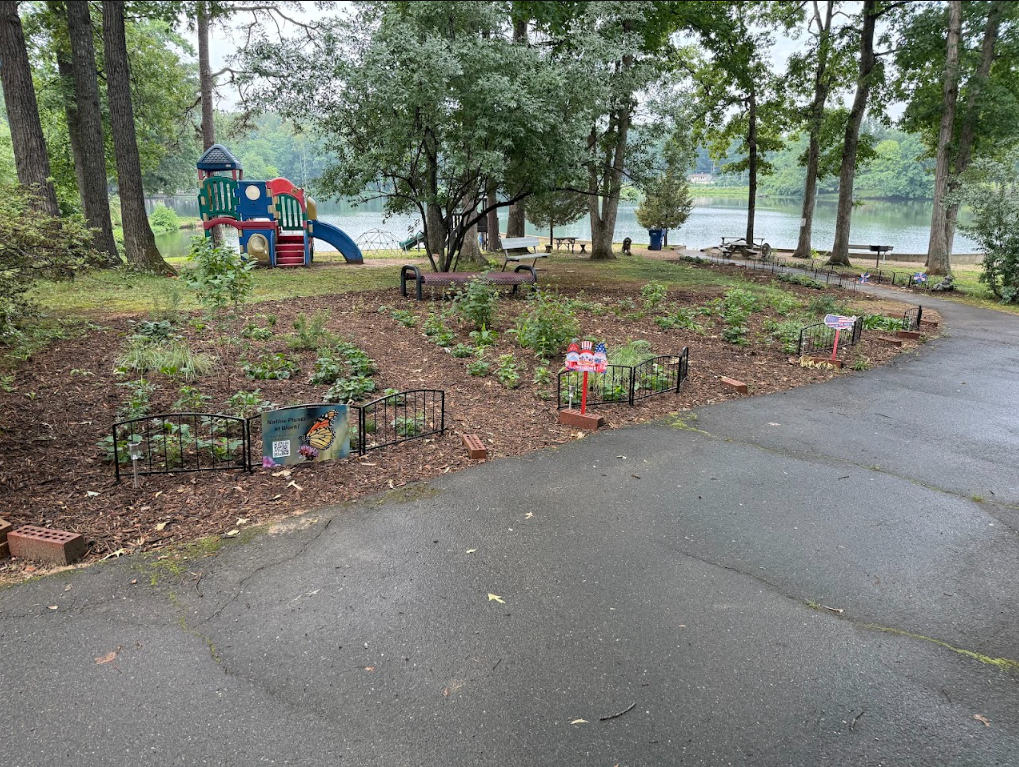
Situated next to Big Lake Arrowhead, the wooded park is a gathering place for area families. The tall pine and oak trees provide wonderful shade, but much of the ground beneath their canopies had become barren. The lack of vegetation and years of stormwater runoff washed away the soil, causing erosion that even threatened the shoreline along the lake.
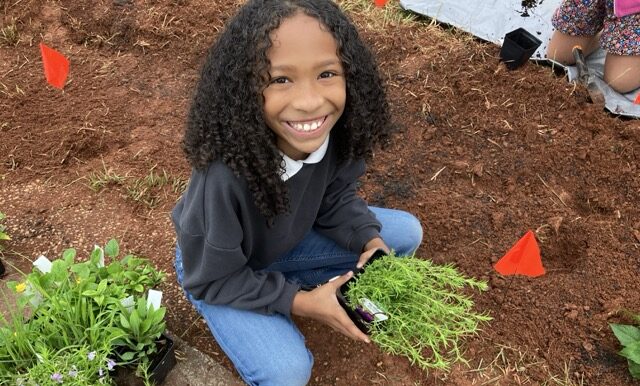
Community members decided to take action, and the Lake Arrowhead Garden project was born. The solution was to replace empty, eroding areas with Virginia native plants. Native plants are perfectly adapted to Virginia’s climate and soils, making them more resilient than non native plants because they have naturally grown in our region for thousands of years. These plants also provide food and shelter for wildlife that depend on them. For example, while adult butterflies drink nectar from many flowers, their caterpillars often rely on specific native plants to survive. Many native bees also collect pollen from particular native species. By planting native gardens, we create healthy ecosystems that support the entire food web—including the insects that young birds depend on for food.
As of May 2026, the Lake Arrowhead Gardens project has installed over 300 native plants representing 18 species. These include flowering perennials (Wild Columbine, Golden Alexander, Beardtongue Penstemon, Blue Wood Aster, and Mountain Mint), shrubs (Virginia Sweetspire, Arrowwood Viburnum, Wild Hydrangea, and Shrubby St. Johnswort), ground covers (Common Violet and American Alumroot), and native grasses (Little Bluestem and Pennsylvania Sedge). The combination of these plants allows for multiple layers of root and above-ground structure to prevent erosion. Flowering perennials and shrubs provide habitat for small animals and birds while attracting pollinators. The ground cover will spread to block out weeds, while grasses help support the structure of taller perennials and provide ground cover support.
The Lake Arrowhead Gardens project is also helping educate the community. An informational sign explains why native plants matter and what kinds of natives they will find in the gardens. Future educational programs will teach families about pollinator conservation, native gardening, and even how to collect seeds so they can grow native plants at home.
One of the most exciting parts of this project is that it shows how environmental stewardship begins locally. Planting just a few native flowers, leaving part of your yard natural, or learning more about pollinators are all ways ANYONE can help. Every native plant added to the landscape creates another source of food, another habitat for wildlife, and another step toward healthier communities.
The next time you visit a park or walk through your neighborhood, take a closer look. Do you notice plants, birds, pollinators, and animals, or is there an uncomfortable absence of life underneath the canopy? Look for places where stormwater is washing away soil, where native plants could replace bare ground, or where a little extra attention could make a big
difference. You don’t have to start with a large garden or a major restoration project. Sometimes, stewardship begins with one negative plant, one rain garden, one restored patch of soil, or simply noticing what could be better. Nature is always working to find a way back in; sometimes we just have to give it the room to grow. By paying attention to the places around us and taking small steps to care for them, we can create healthier habitats, stronger communities, and a more vibrant environment for generations to come.
Guest Author: Amanda Buccellato, Approved by FOR staff August 2026