
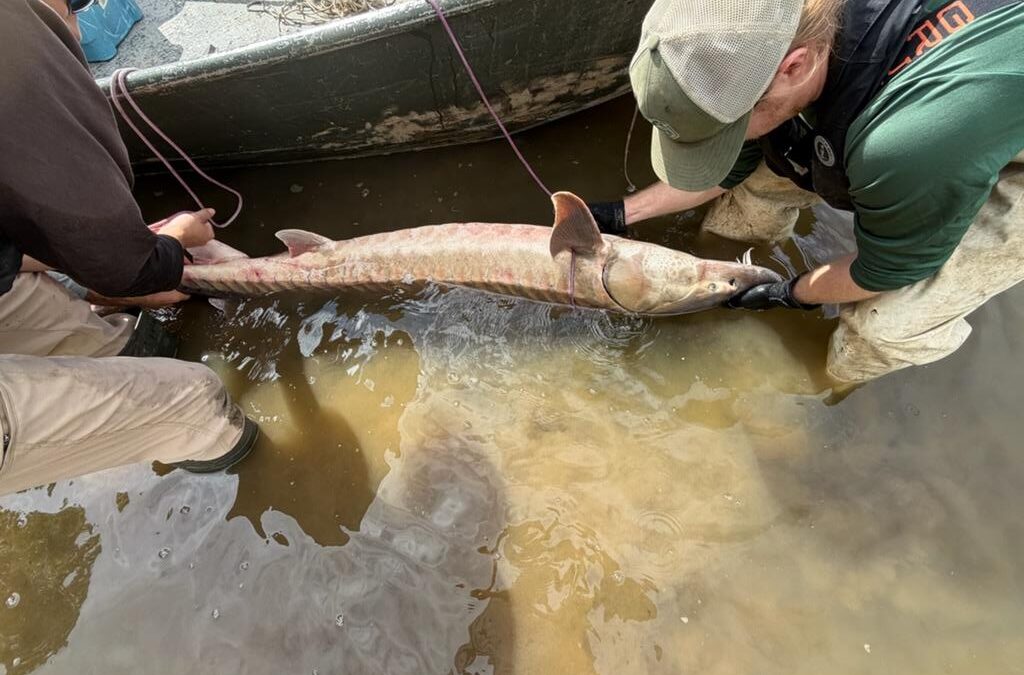
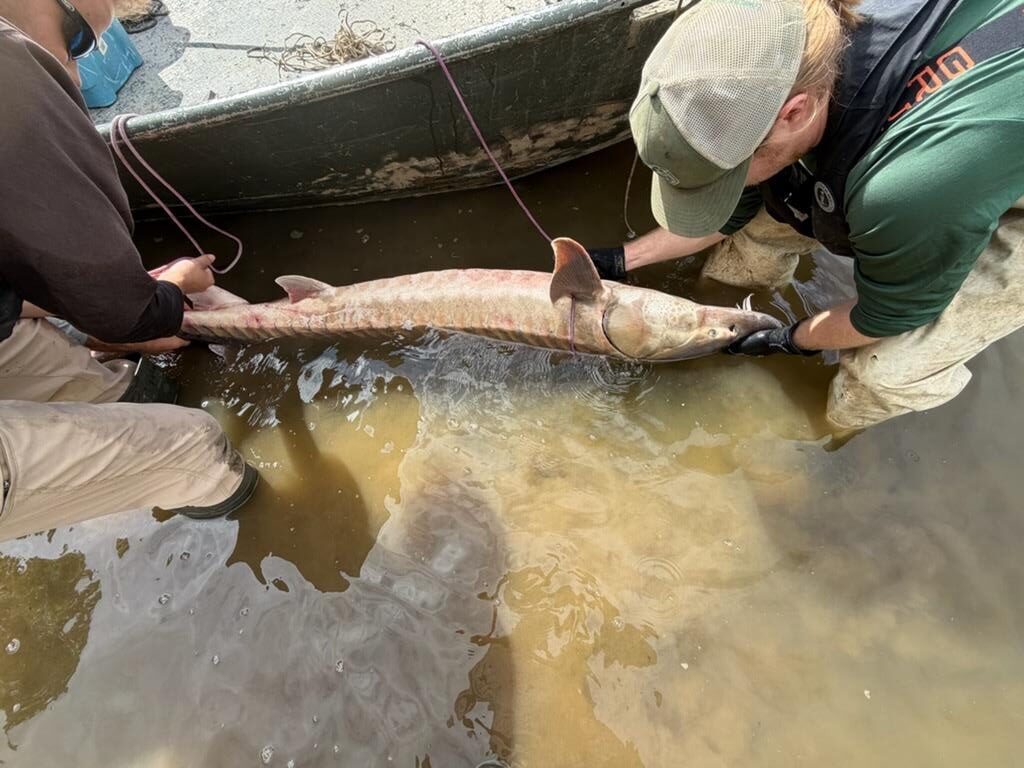
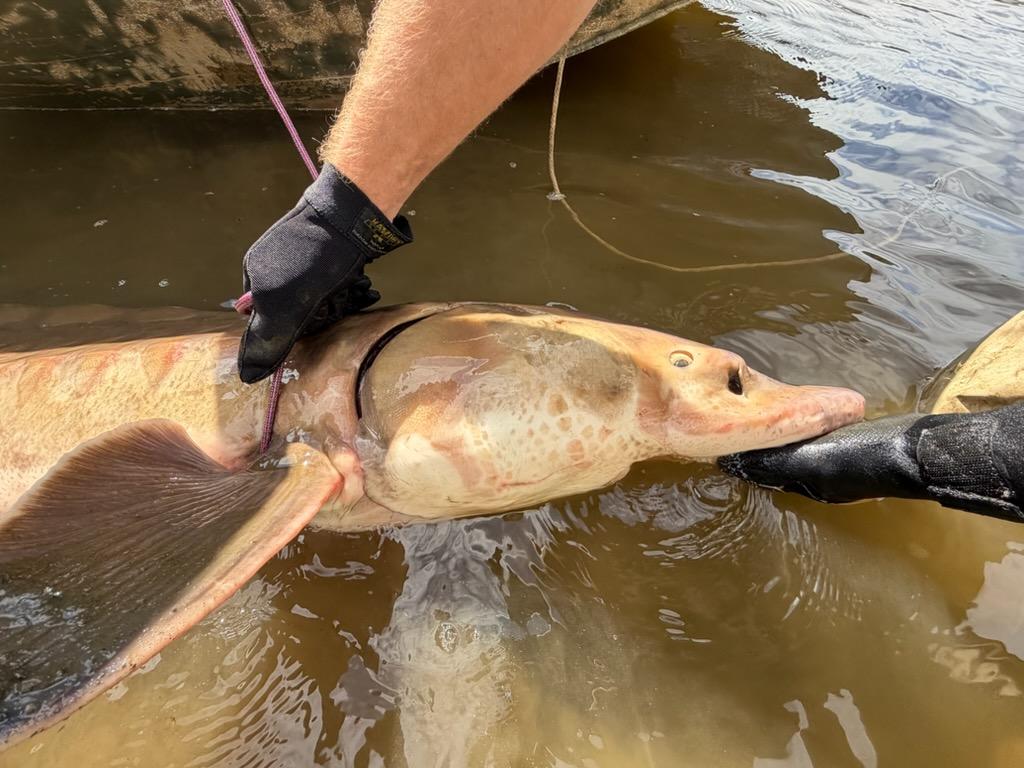
Atlantic Sturgeon have recently been documented in the Rappahannock River near the proposed project site. Urge VMRC to remove Vulcan’s permit application from its October 27 agenda until more information is available and protections against vessel strikes are in place.
Vulcan Construction Materials, LLC (VMRC #2026-0860) proposes to construct a commercial pier with a T-head, finger piers, and an enclosed workers’ shelter; install steel piles for a retractable conveyor system; and set steel pilings or wooden dolphins with batter boards and a winch system to provide access for the loading of sand and gravel barges at the proposed Black Marsh Sand and Gravel Facility at the property situated at the terminus of Black Marsh Road along the Rappahannock River in Caroline County. To view the project drawings, please open 2026-0860 at the link below.
The Virginia Marine Resources Commission (VMRC) will hold a public hearing at its meeting beginning at 9:30 a.m. on Tuesday, October 27, 2026, in the Commission meeting room at 380 Fenwick Road, Building 96, Fort Monroe.
The Concern
Friends of the Rappahannock (FOR) is concerned that this project’s permit reissuance application has not fully addressed potential impacts on Atlantic Sturgeon, a federally designated endangered species, and has not considered potential impacts on adult sturgeon from the resumption of barge traffic. Vessel strikes are the leading cause of mortality for adult Atlantic Sturgeon, and this project would increase vessel traffic on the Rappahannock River.
Atlantic Sturgeon migrate from the ocean into the Chesapeake Bay and historically spawned in all the Bay’s major tributaries. Today, overfishing, pollution, dam construction, and habitat degradation have drastically reduced spawning populations. Atlantic Sturgeon in Virginia can exceed 10 feet in length, weigh up to 400 pounds, and live up to 60 years. Two distinct spawning migrations have been identified, with Atlantic Sturgeon ascending the larger Chesapeake Bay tributaries in either spring or fall. During this upstream journey, Atlantic sturgeon seek the same rocky river bottoms where they were born, in areas relatively free of silt and other debris.
This is especially important now because the Virginia Department of Wildlife Resources has officially documented Atlantic Sturgeon in the Rappahannock River in the last month. Many sightings occurred near the proposed project site and in areas where vessel traffic could resume. More research is planned for 2027 to continue studying Atlantic sturgeon presence and potential spawning activities. The Virginia Institute of Marine Science admits that “as far as the issue raised in public comments of increased vessel traffic causing increased vessel strikes, that is likely correct (provided the number of vessels transiting the area will be increasing).”
Request a Public Hearing
Vulcan’s current permit remains valid for two more years. This permit application does not need to move forward for consideration at VMRC on October 27th.
Please submit comments today requesting that VMRC remove this permit application from the agenda until more information is available and restrictions are enacted to protect Atlantic Sturgeon from vessel strikes.
Comments can be submitted at the link below or emailed to Olivia Upton at Olivia.Upton@mrc.virginia.gov.
Suggested Talking Points
You can use the following language in your comments:
-
Atlantic Sturgeon are a federally designated endangered species. Their populations have drastically declined due to overfishing, pollution, dam construction, and habitat degradation.
-
Atlantic Sturgeon have recently been documented in the Rappahannock River. Many sightings occurred near the proposed Black Marsh Sand and Gravel Facility and in areas where vessel traffic could resume.
-
Increased barge traffic could put sturgeon at risk. Vessel strikes are a leading cause of mortality for adult Atlantic Sturgeon, and this project could increase vessel traffic on the Rappahannock River.
-
More research is needed. Additional research is planned for 2027 to continue studying Atlantic Sturgeon presence and potential spawning activities.
-
There is no need to rush this permit application. Vulcan’s current permit remains valid for two more years, giving more time to gather information and establish protections for Atlantic Sturgeon.