
Restoration
Trees & Native Plants
Restoring the River One Sapling at a Time
Planting Trees to Clean Water
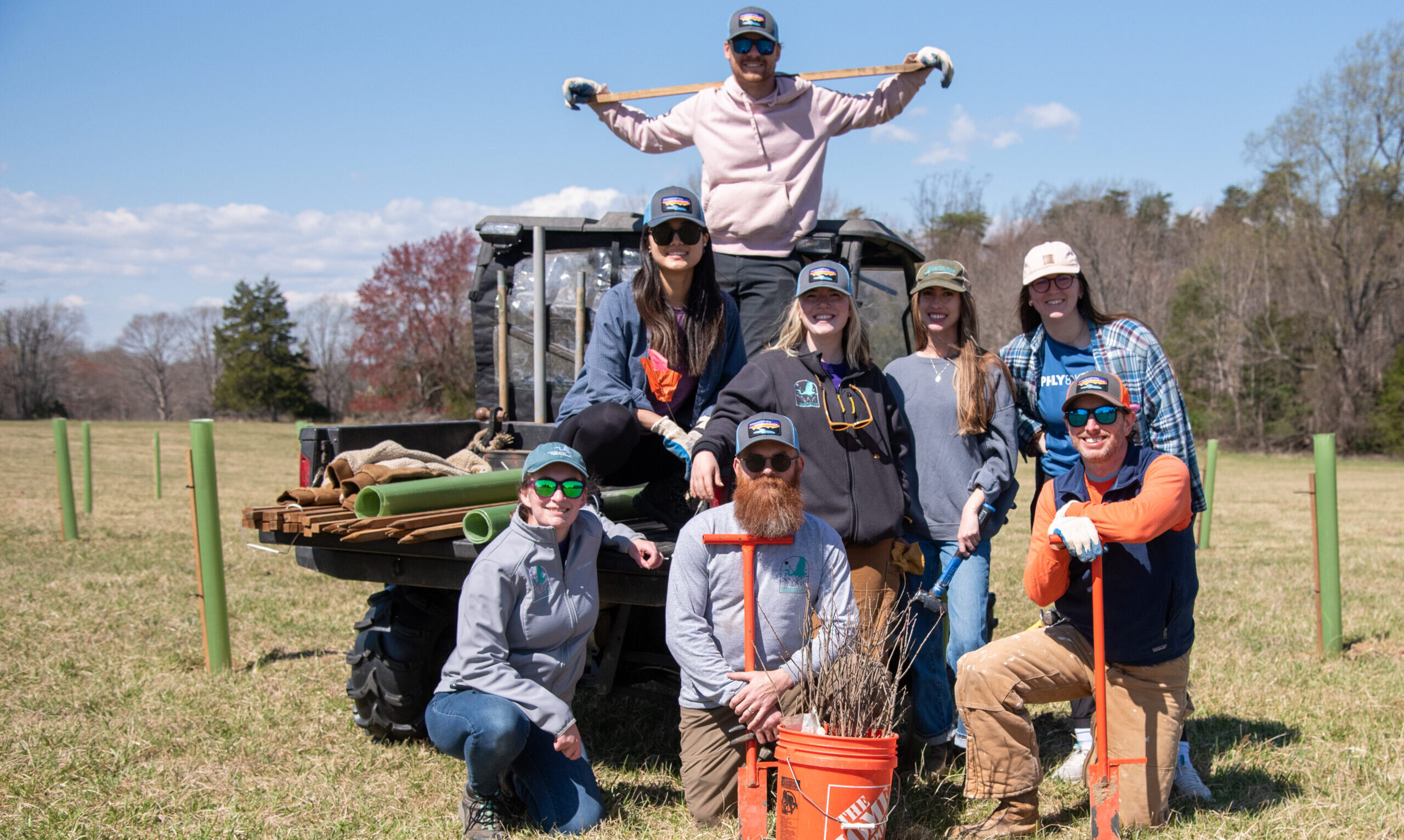
All water flows downstream. Our tree programs allow us to support naturally filtering much of that water to extract excess nutrients and provide habitat for many of the creatures that call the Rappahannock home. See how you can support native plants and trees along the Rappahannock!
FOR’s Tree Programs
Riparian Buffers are a high priority and include the vegetated areas along rivers, streams, creeks, and other waterways. These areas are effective means of protecting water resources throughout the Chesapeake Bay. Waterways protected by a healthy riparian buffer are cleaner, cooler, and provide better habitat for fish, wildlife, and livestock than a stream with exposed or un-vegetated banks.
- Act as filters to reduce nutrients, sediments and other pollutants from entering waterways.
- Help regulate water temperature and provide structure and cover to provide high quality aquatic habitat.
- Slow the flow of runoff, stabilize stream and riverbanks, and reduce erosion.
- Provide vital habitat for fish and wildlife species that rely on forested habitat corridors adjacent to water.
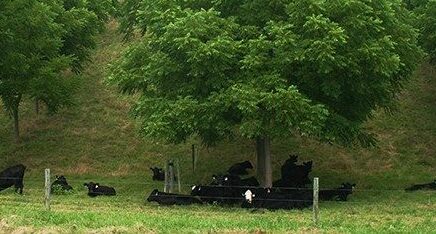
Our Trees for Shade silvopasture program bridges the gap between sustainable agriculture and water quality by integrating native trees directly into active livestock pastures. By strategically planting trees in grazing areas, we help landowners create a dual-purpose landscape that benefits both their bottom line and the watershed. Share your interest here to see if you qualify for a free silvopasture installation on existing pasture land. Financial support is also available for the development or modification of a managed grazing plan.
Why Silvopasture?
- Animal Welfare: Shade reduces heat stress, improving weight gain and milk production in cattle and livestock.
- Forage and Fodder Production: High-quality trees can improve overall pasture productivity by adding nutrient-dense fruits, leaves, pods, seeds, and nuts to your grazing system.
- Climate Resilience: Forested grazing systems sequester more carbon and provide windbreaks that protect pastures and animals during extreme weather.
- Habitat Corridors: These plantings extend the reach of our Riparian Buffers, providing vital movement corridors for local wildlife.
Interested in Riparian Buffers?
Erik Norell
Agriculture and Forestry Specialist
erik.norell@riverfriends.org
Interested in Silvopasture?
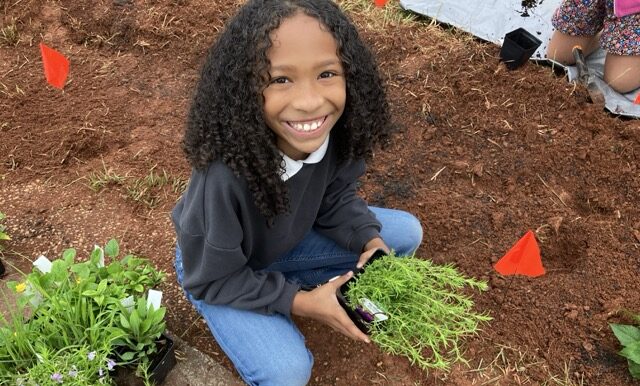
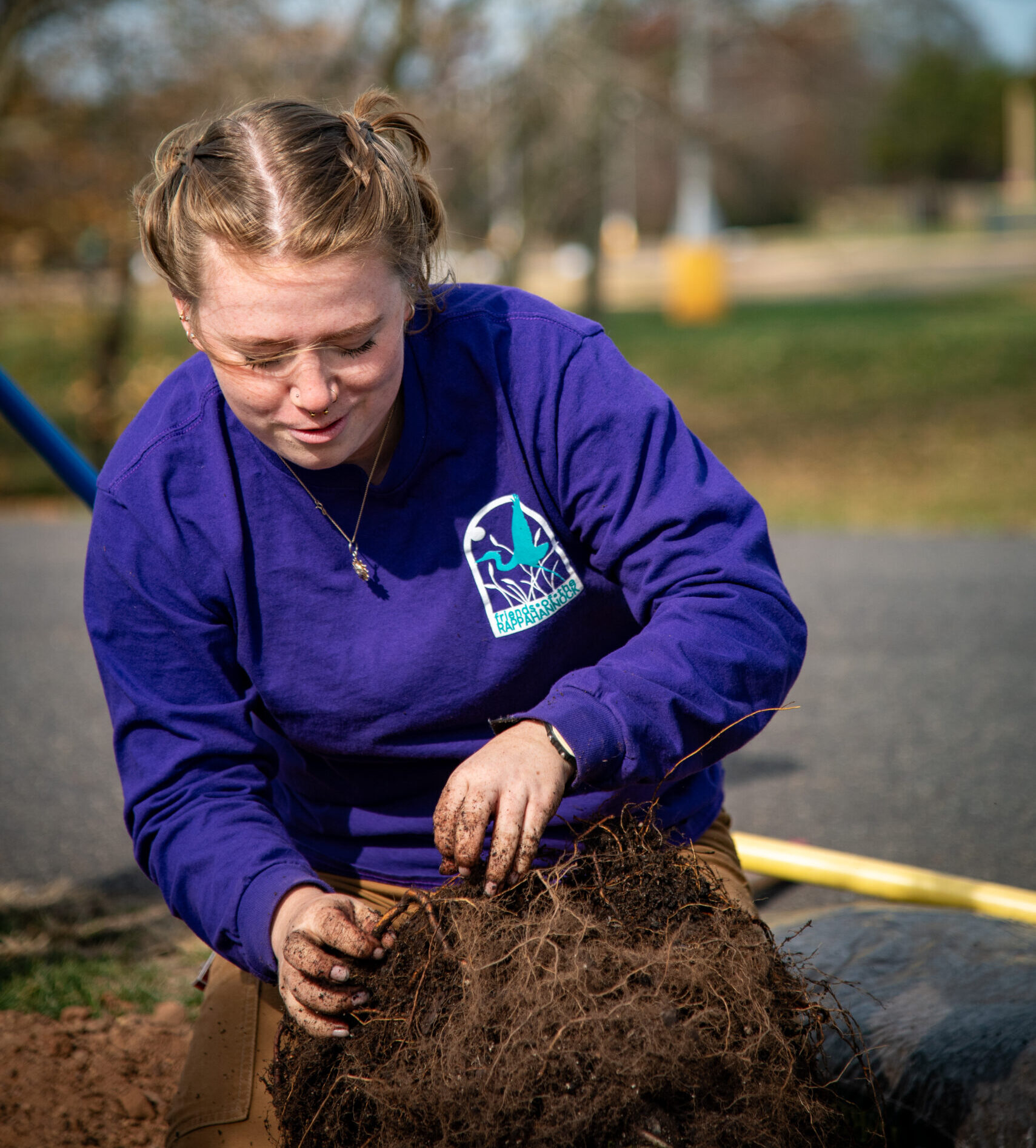
Urban & Community Forestry is an essential aspect to keeping our watershed clean. Each tree planted allows more and more water to be appropriately maintained rather than flooding our stormwater systems. They also decrease urban temperatures and filter out the excess nutrients and pollutants from entering the waterways.
- Trees for Schools is designed to not only increase tree presence in educational environments, but also educate students of all ages on the importance of trees in our landscapes. FOR is happy to assist in projects of all shapes and sizes, and schools will not only be enhanced aesthetically but also reap other benefits of urban trees including cleaner air, reduced runoff pollution, increased habitat for wildlife, and reduced temperatures!
Interested in Trees for your community?
Sarah Dishman
Urban & Community Forestry Specialist
sarah.dishman@riverfriends.org
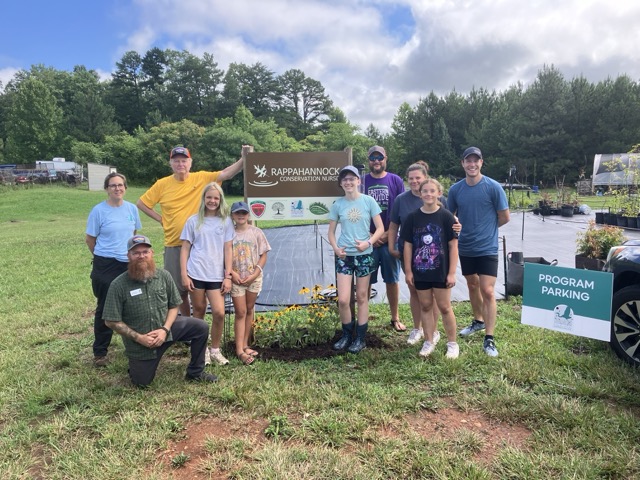
Rappahannock Conservation Nursery was launched in 2022 as a way for Friends of the Rappahannock to minimize waste from leftover trees after spring planting projects. In addition to its primary purpose of recycling trees, the nursery uses over 2,700 gallons of recycled water from rainwater harvesting systems to support the irrigation system. Rooftop solar was also installed to power the water pumps, tools, and other charging needs. The Rappahannock Conservation Nursery now successfully holds and grows several thousand trees ranging from seedlings to 20-foot oaks. All are available to our local landowners, schools, and parks to support high-priority conservation projects that work to improve water quality and provide habitat for fish and wildlife.
- Today’s Seeds, Tomorrow’s Trees is a program implemented in 2024 that allows community members, tree stewards, and students to gather native seeds on their property and from other public areas, which will be nurtured at the nursery and later replanted across the watershed.

VOLUNTEER
For a Cleaner, Healthier River
Volunteer with us to remove litter from the Rappahannock Watershed! Take Action by signing up to volunteer today.