
The oysters on your plate might also be helping restore the Rappahannock River.
Oyster aquaculture and restoration are often seen as separate, but in reality, they work best together. Local oyster farms play critical roles in rebuilding oyster populations, improving water quality, and strengthening the health of the river.
Friends of the Rappahannock (FOR) is grateful to be a recipient of The Nature Conservancy’s Supporting Oyster Aquaculture and Restoration (SOAR) grant. This funding brings together oyster farmers and restoration partners to grow oysters for reef projects while also supporting the long-term success of local aquaculture businesses.
Through this project, Friends of the Rappahannock collaborated with oyster farmers Rogue Oysters, Oyster Catcher Sea Farms (OCSF), and the Rappahannock Tribe, who are leading their “return to the River” initiative in an effort to reclaim cultural practices, restore their connection to the river, and improve the health of the watershed.
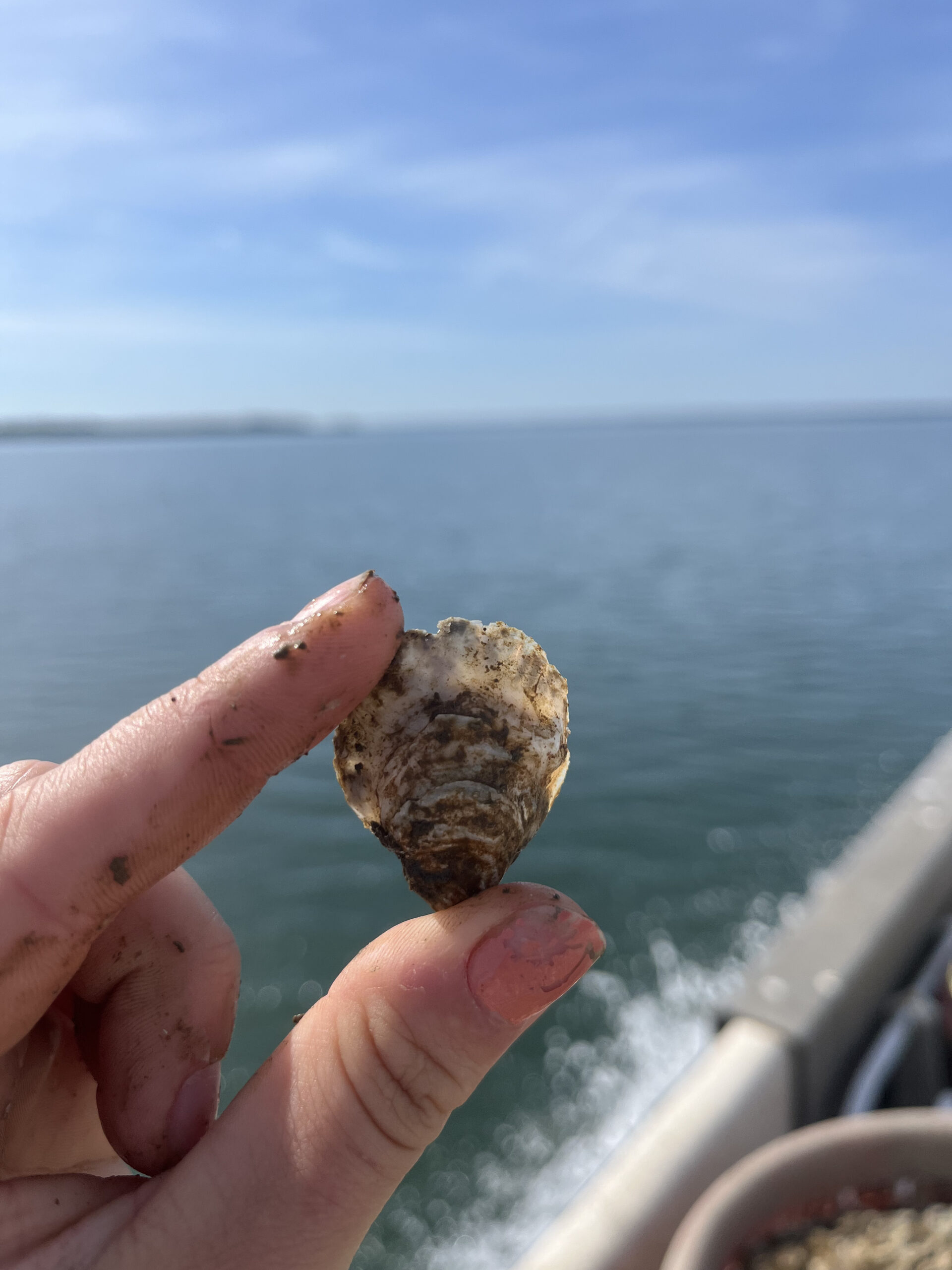
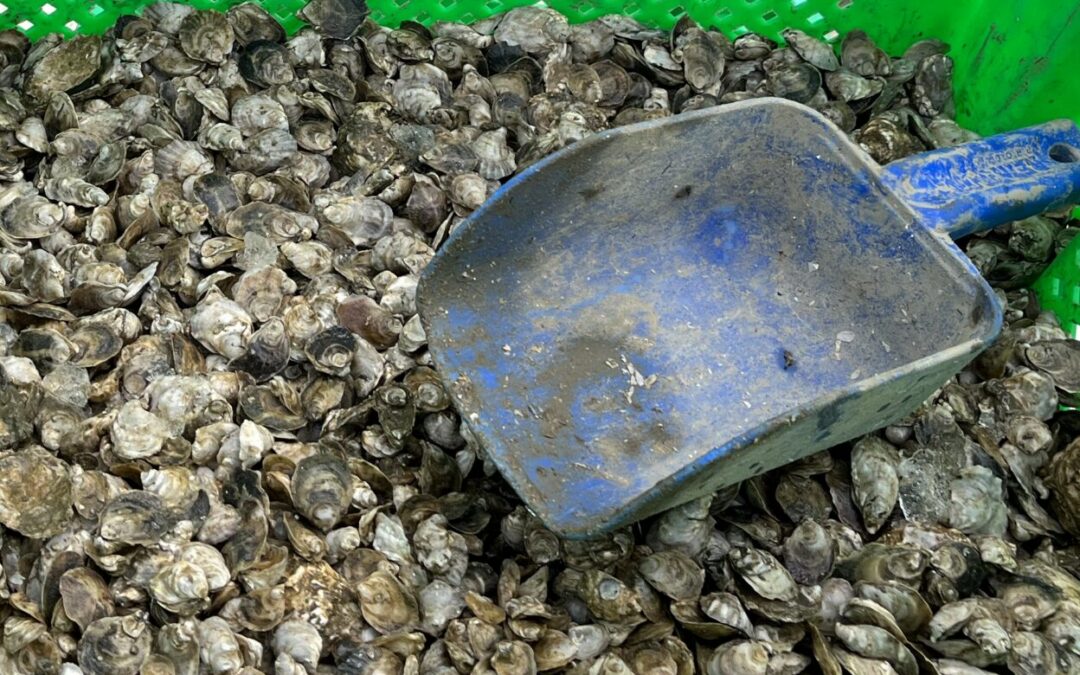
fig. 1: Individual “seed” oyster
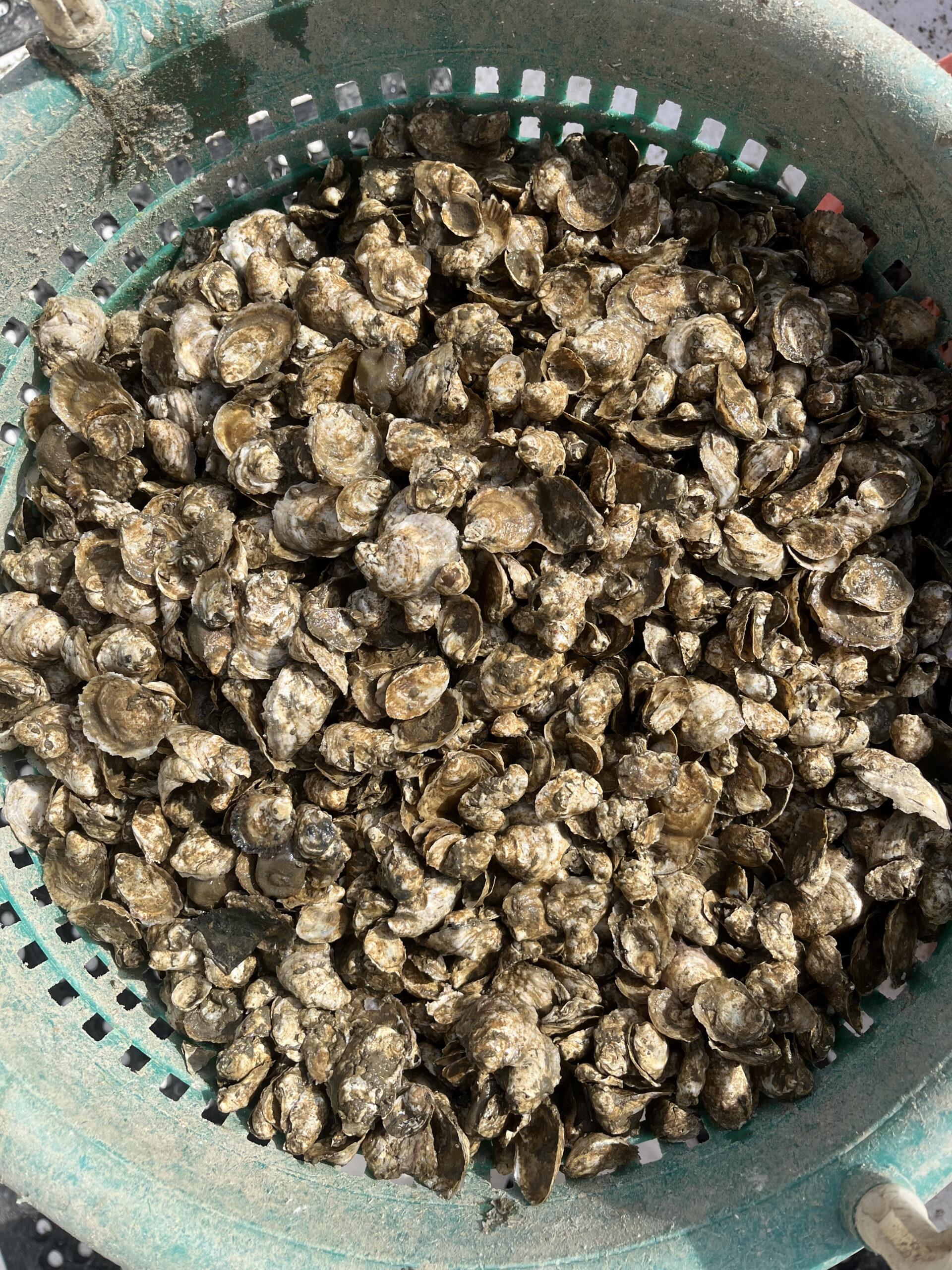
fig. 2: Basket of “seed” oysters
Together, these partnerships are creating meaningful change.
A major milestone of this project was supporting the Tribe’s return to oyster aquaculture. Rogue Oysters made a generous donation of a 72-acre oyster lease, transferring it into the Tribe’s name to sustain their growing program. With additional support from Rogue Oysters and FOR, tribal staff received hands-on training in aquaculture and restoration, laying the groundwork for long-term stewardship, economic opportunity, and cultural revitalization.
At the same time, project partners grew more than 600,000 diploid seed oysters to support rebuilding reefs, contributing to a healthier ecosystem for years to come. Diploid oysters are the kind found naturally in the wild and are able to reproduce. “Seed Oysters” just refers to individual oysters rather than a cluster of oysters. See fig. 1-3
This project also created a win-win opportunity with Oyster Catcher Sea Farms. The farm provided more than 44,000 “spat on shell” oysters, young oysters already settled and attached to a recycled shell, from cages that were no longer in use. Instead of going to waste, these oysters were placed on restoration sites where they will form the foundation of new reef habitat. In return, OCSF received a portion of the SOAR funding for the spat on shell, and their cages were freed up to continue to grow profitable oysters again.
This is what restoration looks like on the Rappahannock: partnerships that support local businesses, uplift Indigenous leadership, and return life to the river. By connecting aquaculture and restoration, this work is helping ensure a healthier, more resilient Rappahannock River for generations to come.
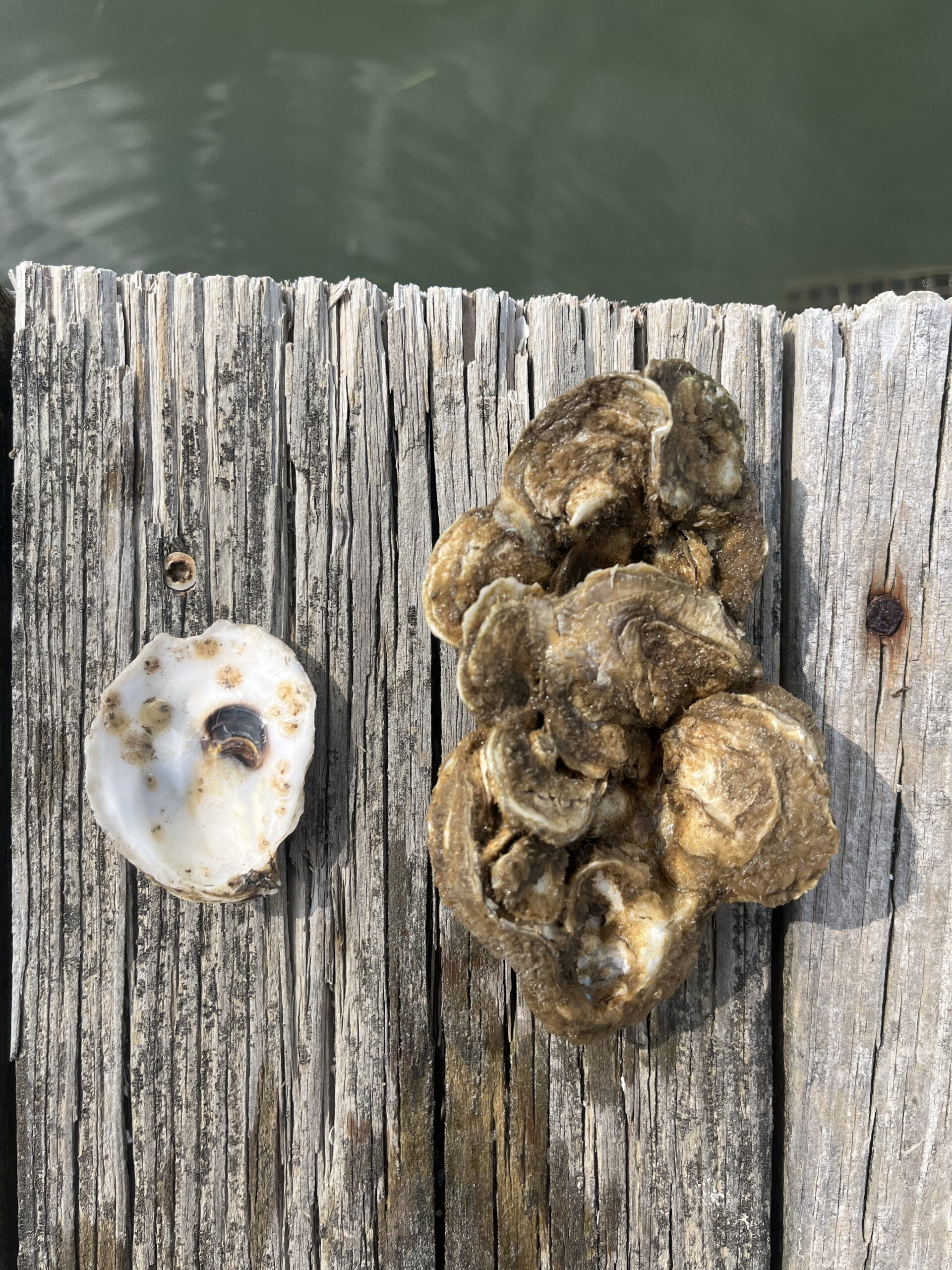
fig. 3: On the left, “spat” on a recycled oyster shell that is only a few weeks old. On the right, “spat” on a recycled oyster shell that is over a year old.